
8 Client Red Flags to Spot Before You Sign
Nearly every freelance horror story, the client who never pays, the project that balloons to triple the work, the person who texts at midnight expecting an instant reply, sent warning signs before the contract was ever signed. We ignore them because we want the work, or because our brain latches onto the exciting parts and skips the small uneasy feelings. Learning to read these signs early is one of the highest-value skills a freelancer can build.
Here are eight of the most common red flags, and what to do when one shows up.
1. They dodge the budget question
A client who will not give even a rough budget after you have asked twice is often either unrealistic about cost or planning to squeeze you. Money should be a normal, early conversation. Evasiveness about it rarely improves once the work starts.
2. "This is quick and easy" from someone who won't be doing it
When a client insists the job is tiny and simple, they are usually setting up the expectation that it should be cheap and fast, regardless of what it actually takes. Real respect for your craft sounds like curiosity about the work, not a dismissal of it.
3. The exposure offer
Anyone offering "great exposure," a portfolio credit, or the promise of lots of future paid work instead of actual money is asking you to work for free with extra steps. Exposure does not pay rent. Paid work is the thing that leads to more paid work.
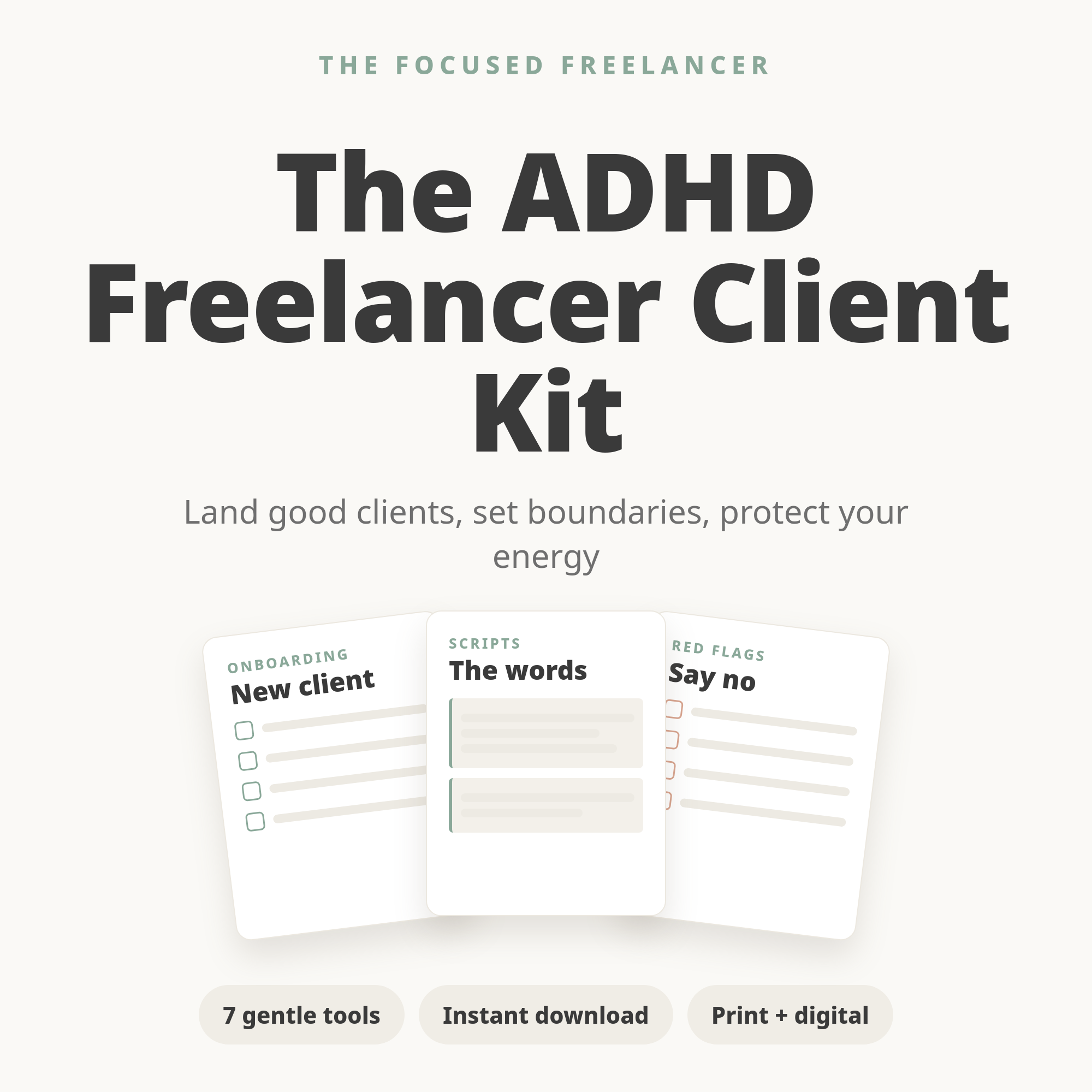
Want a checklist you can actually use? The Client Kit includes a red-flag checklist and onboarding questions that surface these problems before you sign, so you can say a confident yes or a clean no.
4. Bad-mouthing their last freelancer
If every previous freelancer was "a nightmare" or "useless," pause. Sometimes that is true. Often it means the client is difficult to work with and you are about to be the next name on that list. Ask what went wrong, and listen for whether they own any of it.
5. Urgency with no reason
A manufactured rush, "I need this by tomorrow" with no real deadline behind it, is a preview of how the whole project will feel. Genuine urgency comes with a genuine reason. Panic as a default setting does not.
6. They want to skip the contract
"We don't need anything formal, I trust you" sounds friendly and works against you. A simple agreement protects both sides. A client who resists any paperwork is removing the exact thing you would rely on if they later refused to pay.
7. Scope that shifts before you've even started
If the project grows in every conversation during the sales stage, when they are supposedly on their best behaviour, it will not shrink once you are locked in. Early scope creep is a strong signal of what the working relationship will be.
8. Something just feels off
Do not discount the vague unease. It is often your brain noticing a pattern before you can name it. You do not need a court-ready reason to decline a project. "This isn't the right fit for me right now" is a complete sentence, and it has saved more freelancers than any contract clause.
What to do when you spot one
One red flag is a conversation, a chance to ask a direct question and see how they respond. Two or three together is usually your answer. Walking away from a bad client is not lost income, it is protected time, energy, and sanity you get to spend on a good one instead.
Spot the bad ones before they cost you. The Client Kit gives you the red-flag checklist, onboarding questions, boundary scripts, and follow-up templates, so good clients stay and bad ones never get through the door.