Freelance Taxes When You Have ADHD: How to Never Get Caught Short
There is a special kind of dread reserved for the freelancer who opens their tax bill and realises the money is already gone. If you have ADHD, this is not a rare event, it is an annual tradition. The good news: avoiding it has almost nothing to do with being good at tax, and almost everything to do with one small habit you set up once.
A quick note before we start. Tax rules, rates, and thresholds vary a lot by country and change over time, so treat the numbers here as a way of thinking, not exact advice. For your specific situation, check your local tax authority or an accountant. What follows is the system, not the sums.
Why tax ambushes ADHD freelancers
Money that lands in your account feels like money you have. An ADHD brain, tuned to now, does not naturally hold back a slice for a bill that is months away and invisible. So the whole payment gets spent or absorbed, and the tax owed on it quietly becomes a debt to your future self. The fix is to make the set-aside automatic, so willpower never enters the picture.
The one habit: skim every payment
The day a client payment lands, move a fixed percentage of it straight out of your main account. Not at the end of the month, not when you remember, the day it arrives. If you never see it as spendable money, you never spend it. This single reflex is the difference between a calm tax season and a panicked one.
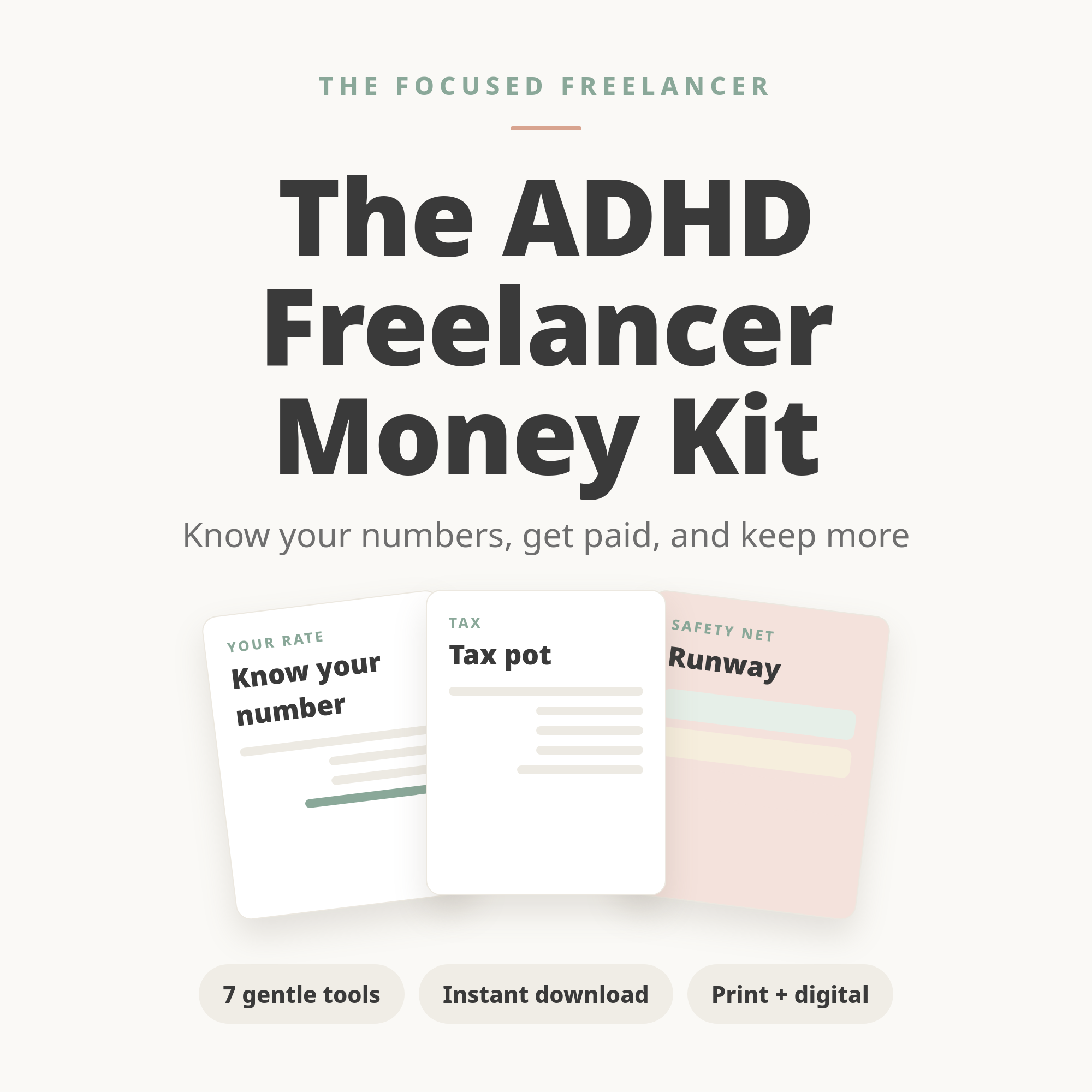
Want a tracker that makes this stick? The Money Kit includes a tax-set-aside page and simple money-in trackers, so skimming every payment becomes a habit you can actually see working.
Open a separate pot you do not touch
Send the skimmed money somewhere annoying to reach: a separate savings account, ideally one without a card attached. Out of sight, out of easy reach, out of temptation. When the bill arrives, the money is simply there, and paying it is a non-event instead of a crisis. Some freelancers even nudge that pot into a savings account that earns a little interest while it waits.
Guess high, adjust later
Not sure what percentage to set aside? Err on the high side. Setting aside too much just means a pleasant surprise later, money you get to keep or reinvest. Setting aside too little means the exact nightmare we're avoiding. A generous, round percentage you actually stick to beats a precise one you keep meaning to calculate.
Track as you go, not in one dreaded session
The reason tax feels overwhelming is usually that it is one giant task done once a year, which is the worst possible shape for an ADHD brain. Break it up. Log income and expenses in small, regular moments, a couple of minutes when a payment lands or a receipt appears. A little and often turns a wall into a series of tiny, ignorable steps.
Put a quarterly check-in on the calendar
Four times a year, spend twenty minutes looking at your pot and your numbers. Is the set-aside keeping pace? Are expenses logged? This light-touch review catches problems while they are small and stops the whole thing from becoming a frantic scramble the week before the deadline.
The takeaway
You do not need to become a tax expert or a naturally organised person. You need one reflex, skim every payment the day it lands, one boring account to hold it, and a habit of logging as you go. Set that up once and the surprise tax bill stops being part of your life.
Make tax season a non-event. The Money Kit gives you the pages to do exactly this: a tax pot tracker, income and expense logs, and a monthly money reset, all designed for brains that would rather not think about it.