
How Much Should You Charge as a Freelancer With ADHD?
Ask most freelancers how they set their rate and the honest answer is: they guessed, felt it was too high, and lowered it. If you have ADHD, add a dislike of numbers and a habit of avoiding anything that feels like admin, and you end up undercharging for years without ever deciding to. Let's fix that with a calm, step-by-step way to land on a rate that actually works.
Start from the number you need, not the market
Most advice tells you to research what others charge. Start somewhere more useful: what you need to earn. Add up your monthly costs, the rent, the bills, the food, the tax, the boring realistic total, then add what you want to save and pay yourself. That yearly figure is your target. Everything else works backwards from it.
Be honest about billable hours
Here is the trap. You do not bill 40 hours a week. Nobody does. Between admin, marketing, emails, quiet weeks, and being a human with an ADHD brain, actual paid hours are often half of that. If you set your rate as if every hour is billable, you build undercharging right into the maths. Assume something like 20 billable hours a week and your rate suddenly has to be realistic.
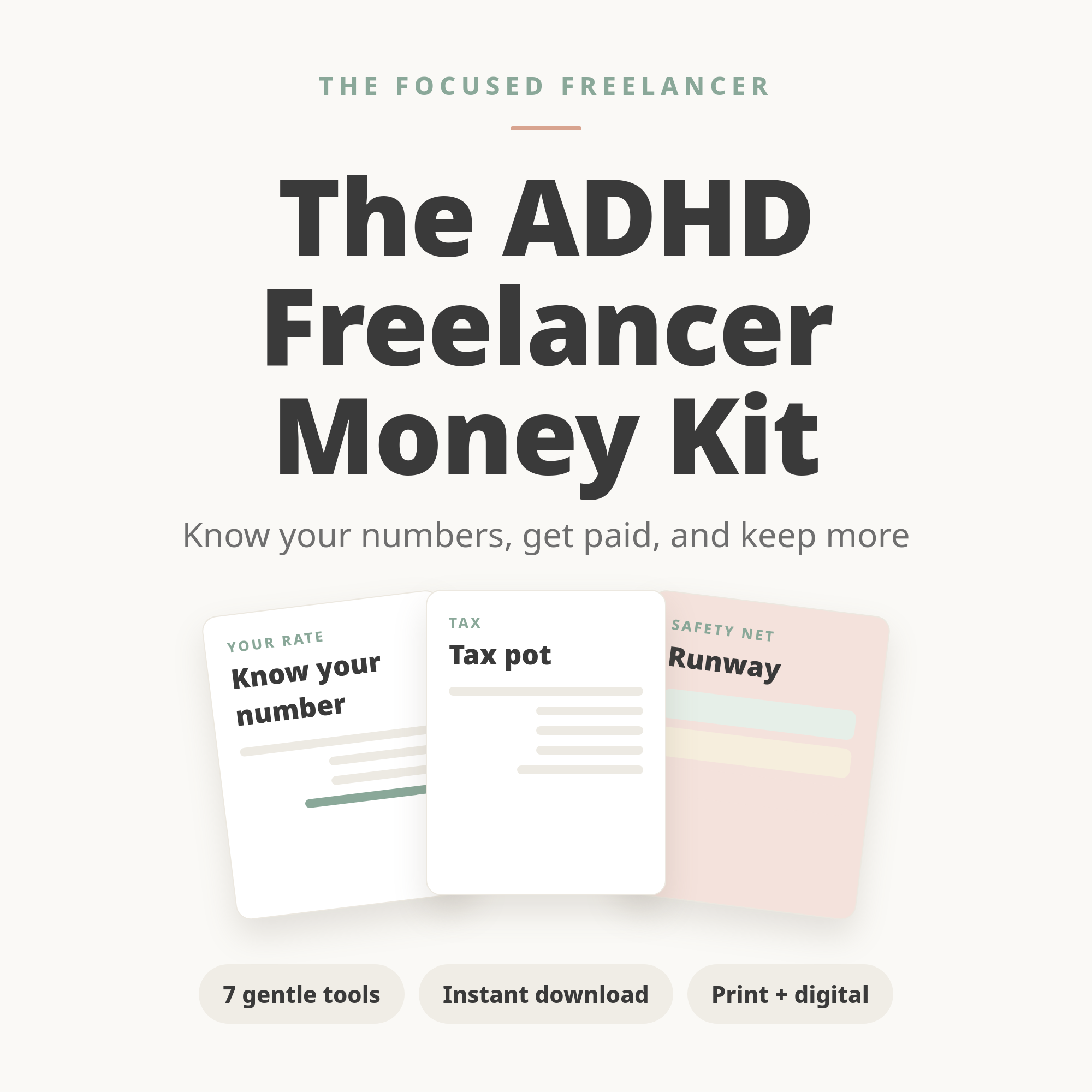
Want the maths done for you? The Money Kit has a rate worksheet that walks you through exactly this, from your real costs to your minimum hourly rate, with no spreadsheet skills required.
Work out your floor
Take your yearly target, divide it by the weeks you actually work, then by your honest billable hours. That gives you a floor: the rate below which the work is quietly costing you money. This number is not your price. It is the line you do not go under. Knowing it changes every negotiation, because you can feel when a project is dragging you below it.
Price the project, not just the hour
Hourly billing punishes you for being fast, which is a strange thing to do to yourself. Once you know your floor, you can quote projects as a flat price based on the value and the rough hours, then work efficiently without watching your own income shrink. Clients often prefer a clear project price too, because it removes their fear of an open-ended meter.
Add a buffer for the ADHD tax
Projects run long. Scope creeps. You underestimate. Build a cushion into every quote so the inevitable overrun does not eat your margin. If you guess a project is ten hours, quote for thirteen. On the rare occasions you come in under, you can delight the client. On the normal occasions, you're simply paid for the time it really took.
Raising your rate, in one sentence
You do not need a speech. For new clients, just quote the new number as if it has always been the number. For existing ones, a simple line works: "From the first of next month my rate is moving to X." No apology, no long justification. Undercharging is the most common freelance mistake, and the fix is usually just deciding to stop.
The takeaway
A good rate is not the biggest number you can nervously say out loud. It is the number that covers your real life across your real billable hours, with a buffer for reality. Work it out once, write it down, and stop leaving money on the table by accident.
Know your number, for good. The Money Kit turns all of this into fill-in pages: a rate calculator, a project quote worksheet, and simple income and expense trackers so your money finally makes sense.